
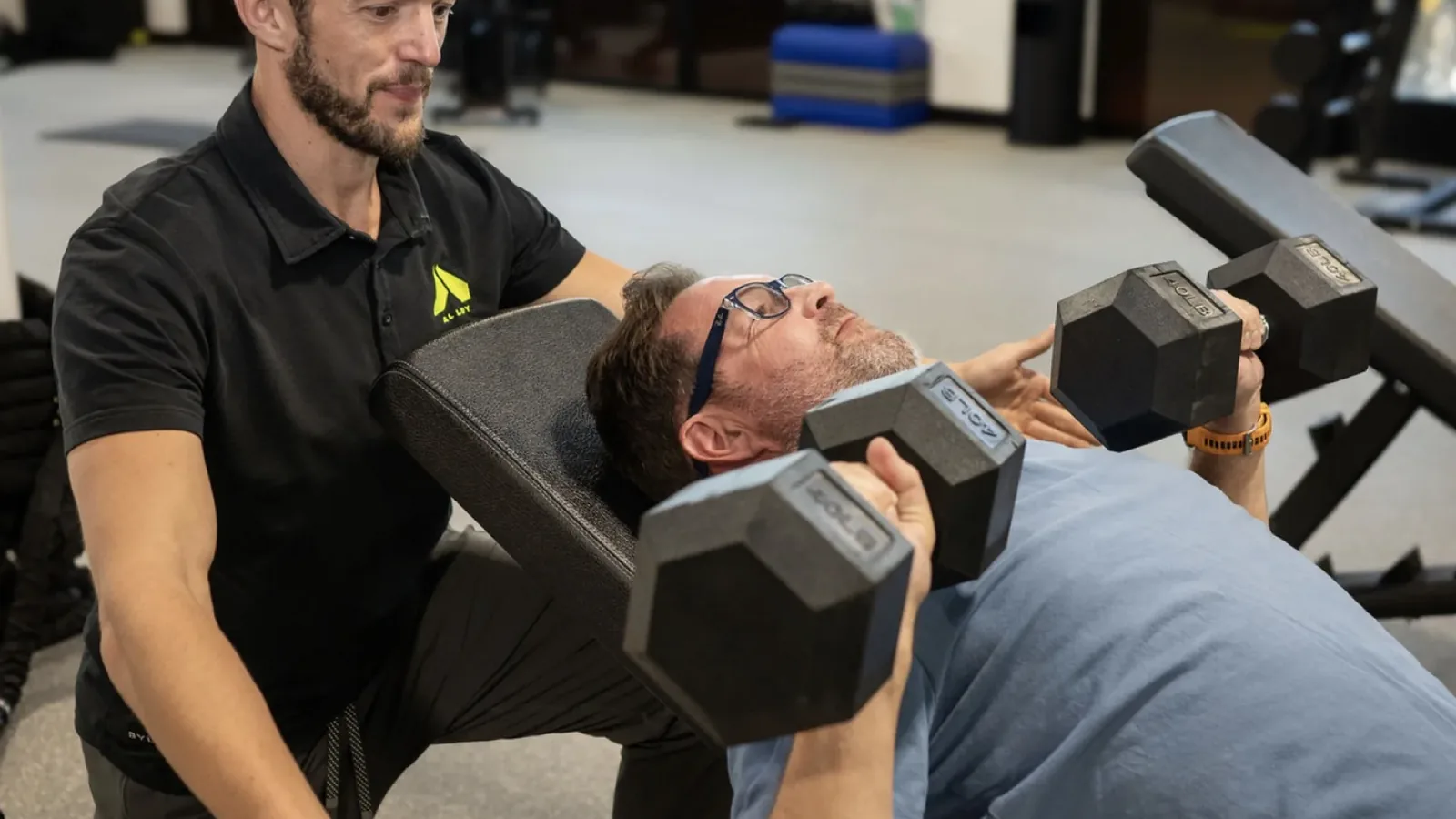
Ask a room of people over 45 what they'd fix first about their body and a surprising number say sleep, not weight. It's the complaint that comes up constantly in the first conversation with new members — and one of the changes they report soonest once they start training.
What changes about sleep after 40
Sleep genuinely gets harder with age, and not because of anything you did wrong.
Deep, slow-wave sleep — the physically restorative stage — declines substantially from young adulthood onward. Waking during the night becomes more frequent. The whole schedule tends to drift earlier. On top of that, this stretch of life piles on complications: menopause and its hot flashes, prostate issues, medications with sleep side effects, joints that ache when you roll over, and the peak years of career and family stress.
The result is a lot of adults who spend eight hours in bed and get considerably less than eight hours of useful sleep.
What strength training does about it
The research on resistance training and sleep is encouraging and reasonably consistent: people who strength train regularly tend to fall asleep faster and rate their sleep quality higher, with the clearest effects in middle-aged and older adults. Several mechanisms plausibly contribute:
- Physical fatigue that's actually physical. Most modern tiredness is cognitive. Your body hasn't done anything to justify shutting down. Loading muscle produces genuine recovery demand.
- Body temperature rhythm. Exercise raises core temperature and the subsequent drop several hours later coincides with the body's normal sleep-onset signal.
- Lower anxiety and stress reactivity. Regular exercise is well supported as helping with anxiety, which is a large part of what keeps people awake at 2am.
- Better daytime structure. Training at a set time anchors your day, and consistent daily timing helps a drifting sleep schedule.
A caveat worth stating plainly: this builds over weeks. One hard session doesn't buy a good night — sometimes the opposite, if it's your first in a year. The pattern shows up across a month of consistent training.
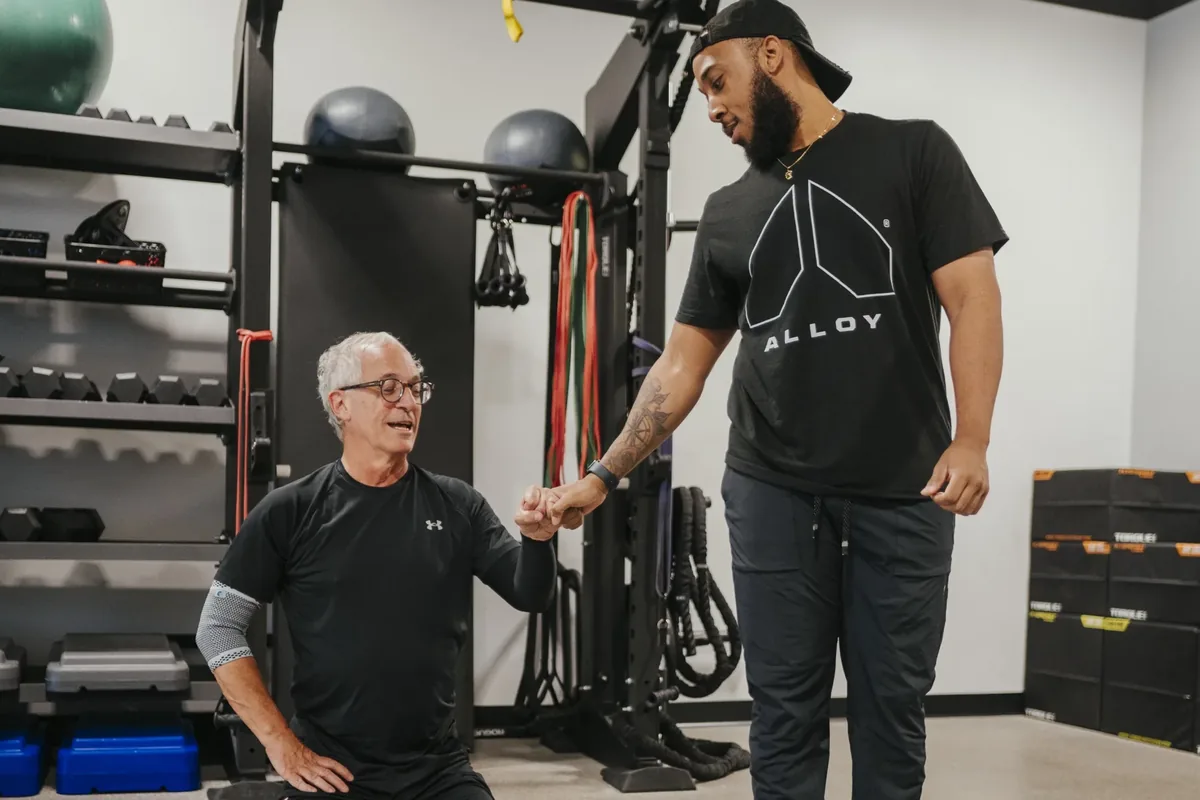
Practical timing, if you're a poor sleeper
- Evening training is fine for most people. The blanket "never exercise at night" advice has not held up well. Moderate training finishing an hour or more before bed doesn't disturb sleep for most.
- But some people are genuinely sensitive. If you reliably sleep worse on training nights, you're not imagining it. Shift earlier for two weeks and compare.
- Morning training helps a drifting schedule most. Early activity, especially with daylight, is the strongest anchor for a body clock that's slipping — which matters in a Wisconsin winter.
- Watch the caffeine, not the workout. The pre-workout coffee at 6pm is a far more common culprit than the session itself.
- Don't chase sleep with harder training. Under-slept and over-trained is a bad combination. On a badly slept day, train — but train sensibly.
When it's not a training problem
Some sleep problems don't respond to exercise because they aren't about activity levels.
Loud snoring, gasping or choking during sleep, or severe daytime sleepiness despite adequate time in bed can indicate sleep apnea, which is common, frequently undiagnosed, and genuinely serious. Chronic insomnia, restless legs, and sleep disruption from medication are all medical matters with real treatments.
We're coaches. We can help you build the training habit that supports better sleep, and we'll happily adjust your program around a rough stretch. We can't diagnose a sleep disorder, and if what you describe sounds like one, we'll tell you to talk to your physician — because that's a conversation worth having rather than something to train through.
Getting the habit going
Members at our studio on Winnebago Street train two or three times a week at a booked time, which turns out to matter for sleep in a second way: the consistent schedule is itself part of the effect. Sessions cap at six, everyone trains on their own program, and a rough sleep week is something the coach adjusts around rather than something you push through.
If sleep is your motivation for starting, say so — it's a legitimate goal and it shapes how we'd program for you. The Starting Point Session includes an InBody body composition scan, a movement assessment, a sample workout, and a plan built around your real schedule.