

Madison has no shortage of places to work out. What it has less of is clarity about which kind of place suits which kind of person. So here's a comparison written to actually help you choose, including the cases where we're the wrong answer.
What each one is genuinely good at
A big-box gym is an equipment rental with excellent hours. That is not an insult — it's a real value proposition. If you have a program you believe in and the self-direction to follow it, paying $30 a month for a squat rack and a treadmill is one of the best deals in consumer fitness. Big-box gyms also win on hours, on location density, and on the freedom to do whatever you want without anyone watching.
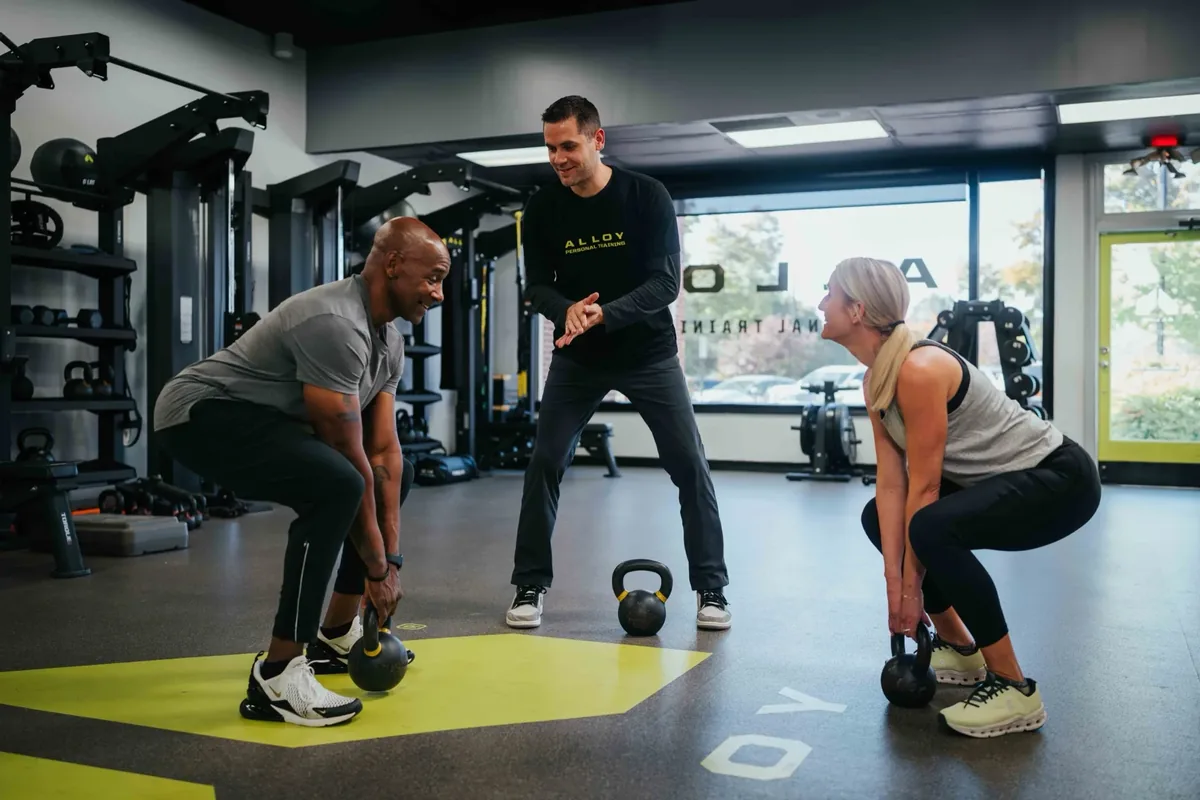
Small group personal training is coaching. You're paying for someone to write your program, watch you execute it, adjust it as you change, and notice when you go missing. The equipment matters far less than the fact that a qualified person is standing there while you use it.
The mistake people make is comparing the two on price and concluding the gym is cheaper. It is cheaper. It's also a different product.
Where the big-box model breaks down for adults over 40
We hear the same story constantly, and it isn't about willpower:
- No plan. Walking in without a program means defaulting to whatever machine is open. Six months later nothing has changed, and the natural conclusion is that exercise doesn't work for you.
- Nobody watching form. In your twenties, sloppy technique costs you nothing. At 50, with an old back injury and a desk job, it costs you six weeks.
- Nothing built around your history. Big-box programming assumes an unbroken body. Most adults over 40 have at least one joint with an opinion.
- Zero accountability. No one at a 5,000-member gym notices you stopped coming. The membership just keeps billing.
- The intimidation factor is real. Plenty of capable adults have walked into a crowded free-weight area, felt out of place, and quietly gone home. That isn't weakness; it's a design problem with the room.
Where small group training breaks down
In fairness, this model isn't universally better:
- It costs more. Several times more than a basic membership. If the budget genuinely isn't there, a membership plus a well-researched program beats not training at all.
- It runs on a schedule. You book sessions. If your work travel is unpredictable and you need a 10pm workout on a whim, a 24-hour gym fits your life better.
- You're training near people. Some people want to put in earbuds and be left completely alone. That's legitimate, and it isn't what we offer.
- You may already have what you need. If you're consistent, progressing, and injury-free, you don't need us. Keep going.
How to tell which one you are
The question isn't which is better. It's which failure mode is yours.
If your history is "I know what to do, I just haven't been doing it," a cheaper membership and a fixed schedule might solve it. If your history is "I've joined three gyms, gone hard for six weeks, tweaked something or lost the thread, and quit" — that's a coaching problem, and more equipment access won't fix it.
Our studio is on Winnebago Street in Schenk-Atwood, a few minutes from Olbrich Gardens. Sessions cap at six, every member trains on their own program, and the coaching is individual even though the room isn't empty. The Starting Point Session includes an InBody scan, a movement assessment, a sample workout, and a plan — so you can find out what training here actually feels like before deciding anything.