
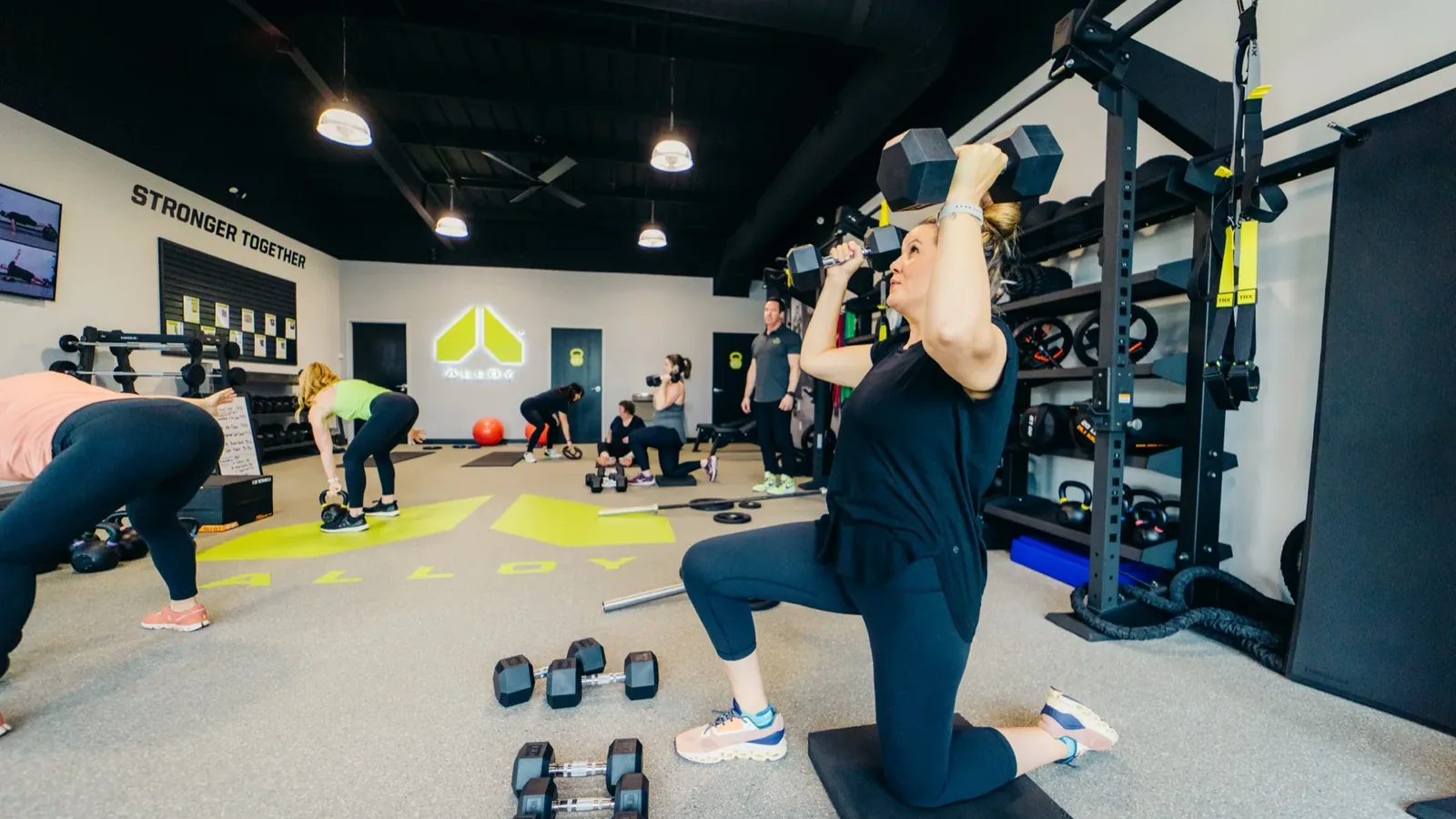
Most people over 40 warm up the way they were taught in a school gym in 1985: bend over, touch your toes, hold it, count to twenty, feel virtuous. It's the wrong tool, and there's decent evidence it can leave you slightly weaker for the session that follows.
Here's what a warm-up is actually for, and what ten minutes should contain.
What a warm-up is doing
Three things, none of which involve holding a stretch:
- Raising tissue temperature. Warm muscle and connective tissue are more pliable and tolerate load better. This is literal, not metaphorical — the name is accurate.
- Circulating fluid through joints. Cartilage has no blood supply and gets nourished by movement. That's why a stiff knee feels dramatically better ten minutes in.
- Waking up the nervous system. Your brain needs a few reps to remember how to coordinate a movement pattern well. First set of the day is always the worst-coordinated set of the day; a warm-up moves that first set somewhere it doesn't matter.
Static stretching accomplishes approximately none of these. Worse, holding long stretches immediately before lifting appears to temporarily reduce strength and power output. Save it for afterward, or for its own time.
What ten minutes should look like
The structure that works, in order:
1. Two or three minutes of general movement. Bike, brisk walk, rower — anything that raises your heart rate and body temperature a little. Easy. You should be able to hold a conversation.
2. Controlled joint movement, through range. Not held stretches — motion. Ankle rocks, hip circles, controlled shoulder rotations, gentle spinal rotation. Move each joint you're about to load through the range you're about to use, under your own control.
3. Movement rehearsal, unloaded or nearly so. Bodyweight squats before you squat. Hip hinges with no bar before you deadlift. Band pull-aparts before pressing. This is the nervous-system portion, and it's the piece most people skip.
4. Ramp-up sets. Two or three progressively heavier sets of your first exercise before the working weight. This isn't optional after 40, and it's where a surprising number of people's warm-ups actually fail — they do a lovely general warm-up and then load the first working set cold.
What changes after 40 specifically
The warm-up matters more as you get older, for reasons that are structural rather than motivational:
- Connective tissue takes longer to get ready. Tendons and ligaments adapt more slowly than muscle and warm more slowly too. The classic over-40 injury is a warm muscle pulling on a cold tendon.
- You're starting from further away. A 25-year-old comes to the gym from a day of moving around. A 52-year-old often comes from nine hours in a chair. There's simply more distance to cover.
- Old injuries need specific attention. The shoulder from 2009 might need three extra minutes that nobody else in the room needs. That's normal, and it should be written into your warm-up rather than improvised.
- Cold weather is a real variable. In a Madison February, walking in from a frozen parking lot means genuinely starting colder. Add a few minutes; it's not fussiness.
The honest shortcut
If you're rushed and can only do one thing: ramp your first exercise properly. Three progressive sets before your working weight buys most of the benefit. Everything else is an upgrade on top of that.
If you have ten minutes, do the whole sequence. It's the cheapest injury insurance available, and after 40 the session where nothing goes wrong is worth much more than the session where you saved eight minutes.
At our studio on Winnebago Street in Schenk-Atwood, the warm-up is part of the coached session rather than something you're expected to figure out alone before the coach starts paying attention — and it's individualized, because the person with the cranky shoulder and the person with the stiff ankles need different first ten minutes. Sessions cap at six, so that's actually possible.
If nobody's ever walked you through a warm-up built for your body, the Starting Point Session includes a movement assessment that shows exactly which joints need the extra minutes, along with an InBody body composition scan, a sample workout, and a plan.