
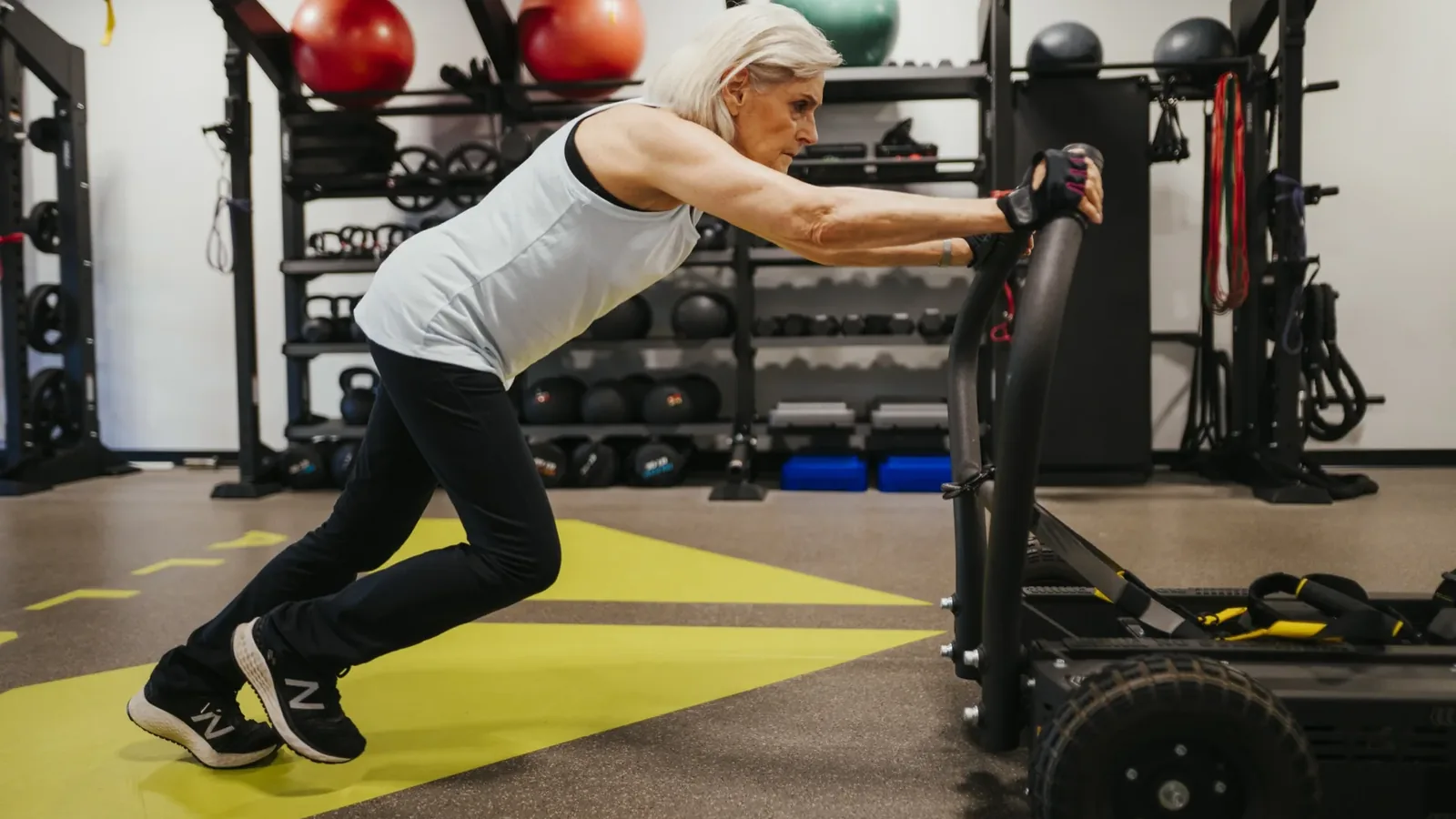
Nobody's independence ends because they couldn't bench a certain number. It ends because getting off the floor became a genuine problem, or the stairs started requiring the rail, or carrying groceries in one trip stopped being possible.
Those are trainable capacities. Here are five worth keeping, and what they actually require.
1. Getting off the floor without help
The single most useful physical capacity in later life, and the one people lose most quietly, because they stop getting down there in the first place.
Floor-to-stand combines lower-body strength, hip and ankle mobility, and coordination. It's a pattern, and patterns you don't practice degrade. Plenty of people first discover the problem in an emergency — which is the worst possible time.
Train it by: actually practicing it. Get down and up deliberately, several times, in different ways — through a half-kneel, through a squat, rolling to one side. Split squats, step-ups, and controlled squats build the strength underneath it.
2. Carrying something heavy for a distance
Groceries from the car, a suitcase through an airport, a grandchild across a parking lot. Loaded carries demand grip, core stability, shoulder position, and simple willingness to be under load while moving.
Grip strength gets a lot of research attention because it's easy to measure and tracks well with overall strength — it's a marker, not the mechanism. Getting stronger generally is what improves it.
Train it by: farmer's carries, suitcase carries with weight on one side only, and any pulling movement that makes you hold onto something heavy.
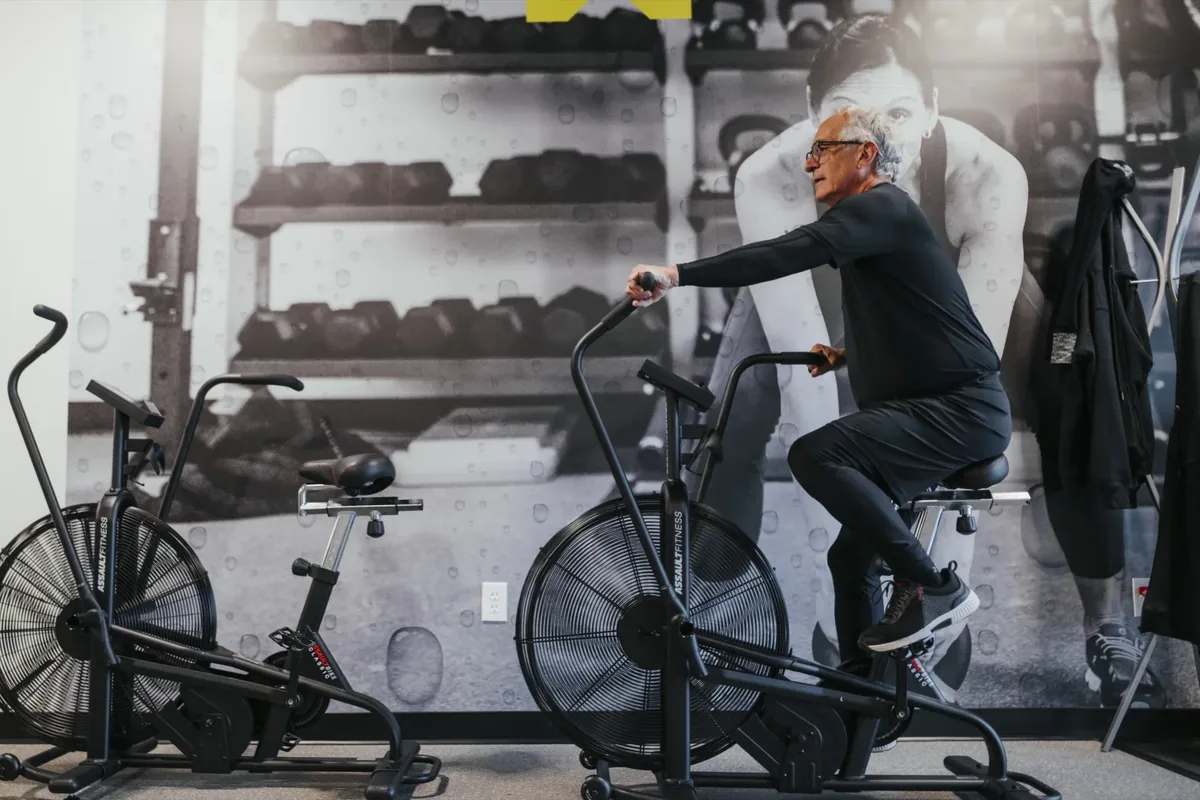
3. Climbing a flight of stairs without thinking about it
Stairs are single-leg strength plus the aerobic capacity to not be winded at the top. They're also where a lot of people first notice a knee.
The rail is a reasonable safety habit. Needing the rail is a different thing, and it usually shows up gradually enough to explain away.
Train it by: step-ups at a height that challenges you, split squats, single-leg work generally, and easy aerobic conditioning so the cardiovascular side isn't the limiter.
4. Standing on one leg long enough to put on trousers
An unglamorous test that matters more than it looks. Single-leg balance is one of the clearest indicators of fall risk, and it declines quietly — most people don't test it until they wobble.
The good news is it responds quickly. Balance is a skill, and skills come back.
Train it by: standing on one leg while brushing your teeth (genuinely — it's free and it works), single-leg deadlifts, split-stance work, and controlled step-downs.
5. Reaching overhead without pain or compensation
Putting something on a high shelf, getting a case down from a closet, washing your own hair comfortably. Overhead range is the first thing desk work and decades of forward-reaching take away, and shoulders that can't get overhead cleanly find another way — usually by arching the lower back.
Train it by: thoracic spine work, controlled overhead pressing within a range that doesn't provoke pain, and pulling volume to balance out years of pushing forward.
Why these beat chasing a number
There's nothing wrong with a personal record. But a PR is a snapshot of one moment on one lift, and the five capacities above are what strength is *for*. They're also more honest — you can't fool the floor.
At our studio on Winnebago Street in Schenk-Atwood, these are the things programs are built toward, especially for members in their 50s, 60s, and beyond. Sessions cap at six, everyone trains individually, and progress gets tracked with InBody body composition scans alongside the plain question of what you can do now that you couldn't in the spring.
If you want an honest baseline on all five, the Starting Point Session includes a movement assessment, an InBody scan, a sample workout, and a plan. Most people find one or two of these have slipped further than they expected — and that they come back faster than expected too.