
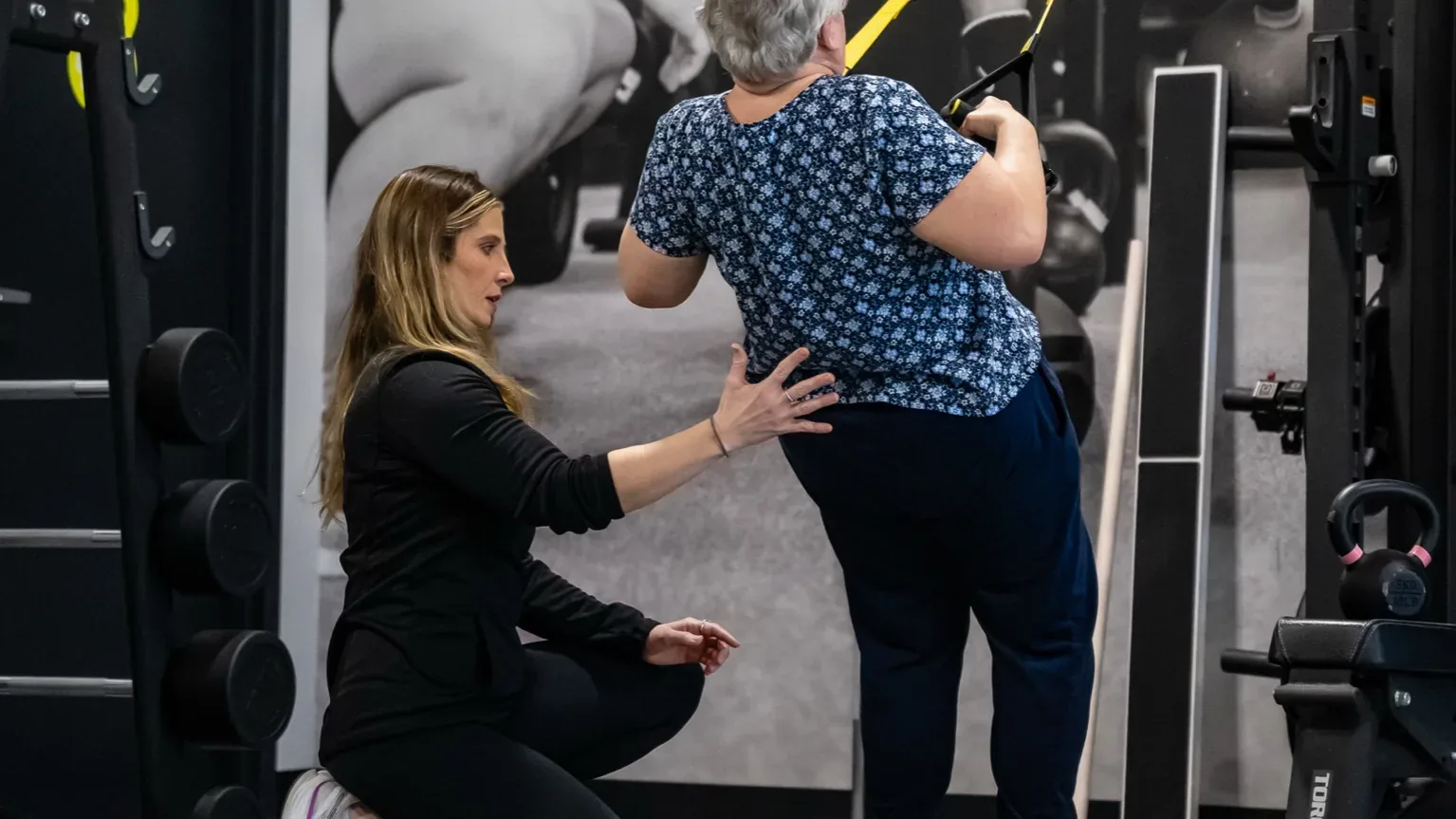
Most people quit strength training somewhere in weeks three through six. Not because it stopped working — because they expected the mirror to have changed by then and it hadn't. Knowing the actual timeline makes that stretch survivable. Here's what really happens, and when.
Weeks 1–3: your nervous system gets the memo
The first thing that improves isn't muscle. It's coordination.
Your brain gets better at recruiting the muscle fibers you already have, in the right order, with the right timing. This is why the weights climb surprisingly fast at the start — people routinely add meaningful load in the first three weeks — and why that early progress isn't visible in the mirror. You haven't built much new tissue yet. You've learned to use what you had.
What you'll notice in this window:
- Weights going up session to session, sometimes dramatically
- Movements that felt awkward in week one starting to feel like yours
- Some muscle soreness in the first two weeks, fading as you adapt
- Better sleep, for a lot of people, fairly quickly
What you won't notice: much of anything in the mirror. That's on schedule.
Weeks 4–8: the quiet middle
This is the stretch that decides whether you're still training at Christmas.
Progress becomes less dramatic. The big early jumps in load flatten into smaller, steadier increases. Actual muscle tissue is being built now, but slowly, and it's happening underneath a layer of body fat that hasn't gone anywhere visible yet. The daily feedback dries up right when the novelty does.
What's genuinely happening in this window, even when it doesn't feel like it:
- Real muscle protein accumulation. Slower than the internet implies, but happening.
- Tendon and connective tissue adaptation. Slower than muscle — this is your future injury resistance being built.
- Everyday things getting easier. Stairs, groceries, the basement, getting off the floor. Members almost always report this before they report anything about their appearance.
- Better blood sugar handling and blood pressure for many people. Real health changes tend to precede visible ones.
The single most useful thing you can do in weeks four through eight is stop evaluating the program daily. Track your lifts, keep showing up, and let the timeline run.
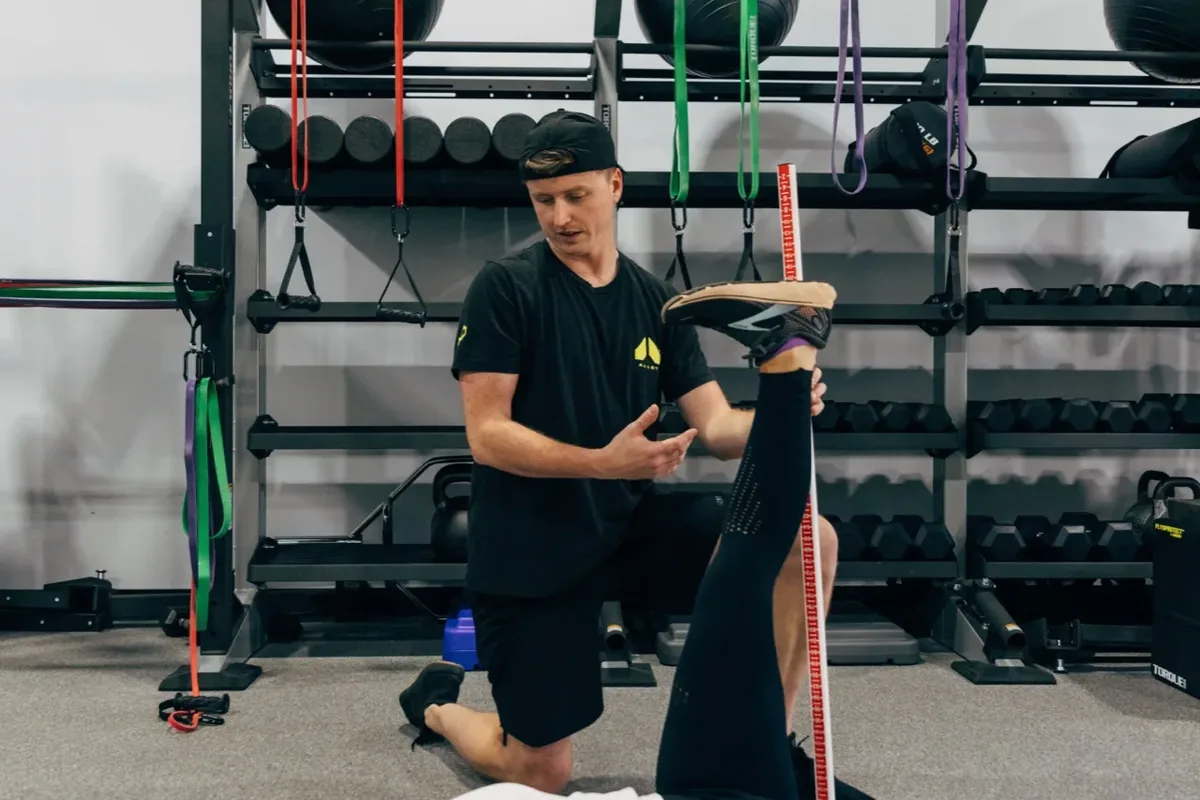
Weeks 9–13: it starts showing
Somewhere around month three, the changes become legible. Clothes fit differently — usually the waistband before the scale. Posture shifts. People start commenting, often before you've seen it yourself.
By this point most consistent trainees are looking at measurably more lean mass and less fat mass, meaningfully stronger lifts, and — the part that matters most for the next thirty years — a body that has learned to recover from being loaded.
A note on the scale: it's the worst tool for this window. Adding lean mass while losing fat can hold scale weight almost perfectly flat while your body composition changes substantially. That's a success reading as a failure. Measure composition, measure your lifts, measure how you feel on the stairs.
How to make 90 days actually happen
- Set a frequency you can hit on a bad week, not a good one. Two sessions weekly, held, beats four sessions attempted.
- Write down what you lifted. Progress you didn't record is progress you'll forget during the quiet middle.
- Don't restart from zero after a missed week. Return to the same weights. A week off costs almost nothing.
- Report pain early. Muscle soreness is normal. Joint pain is information, and it's much cheaper to address in week five than in month five.
Our studio is on Winnebago Street in Schenk-Atwood, a few minutes from Olbrich Gardens. Sessions are capped at six, everyone trains on their own program, and progress gets tracked with InBody body composition scans rather than left to the bathroom scale — specifically so the quiet middle stretch has something honest to show you. The Starting Point Session includes that first scan, a movement assessment, a sample workout, and a plan. Ninety days from that session is a genuinely different body.